Arab Sea Orbital turbulence developments in the Arabian Sea and its potential impact on the region
Weather of Arabia - Weather forecast staff in Arab weather watch the orbital activity currently centered in the middle of the Arabian Sea, where the latest satellite images show huge quantities of rain thunderstorms, which are accompanied by strong winds whose velocity reaches 100 km / h.
Orbital turbulence projections in the coming hours of this Thursday
Regarding the forecasts of the orbital situation during the next hour, the cadre of predictions stressed that the intensity of the air strike has already begun to gradually decline, and will further decline during the coming hours as a result of its collision with the winds of the forgotten
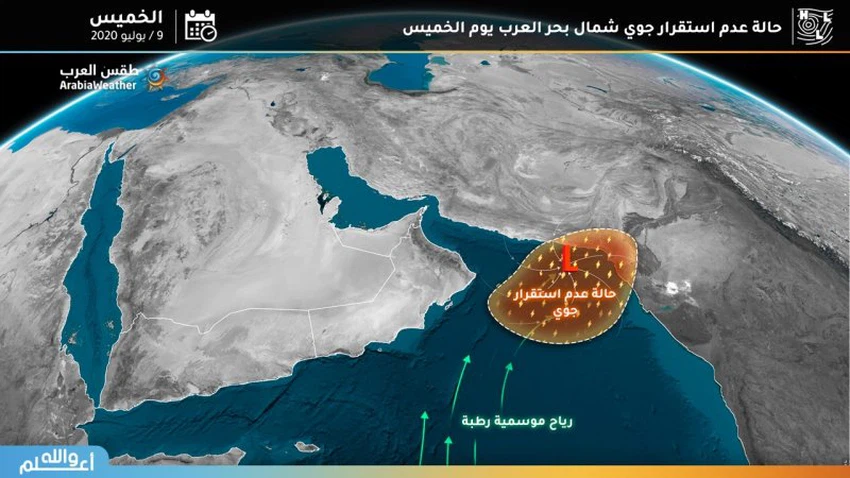
Monsoon winds and their role in killing orbital turbulence
The monsoons are considered the main reason for killing and preventing the development of any tropical activity in the region. These winds blow from the Arabian Sea towards India at a high speed, as the speed of some of its gusts reaches 80 km / hour, and these days are considered the peak of wind activity Monsoon.
Follow the movement of clouds directly via satellite
Will orbital turbulence affect the Sultanate of Oman?
No, the current orbital turbulence will not affect the Sultanate of Oman, except in the form of a flow of quantities from high clouds to the Sultanate’s air at intervals, which may be punctuated by some of the rain showers, and we will be with you in a continuous follow-up of developments as they happen.
Browse on the official website