
In conjunction with the heat wave, western Canada records more than 710 thousand lightning strikes in just 15 15

2021-07-07 2021-07-07T14:55:23Z
رنا السيلاوي
رنا السيلاوي
محرر أخبار - قسم التواصل الاجتماعي

Weather of Arabia - Western Canada is usually associated with milder weather, but a dangerous heat wave is currently affecting the region, exacerbated by forest fires.


A severe heat wave hit the Pacific Northwest, which raised temperatures to record levels and led to an increase in the number of devastating wildfires.


The wildfires caused massive clouds to engulf the area, resulting in more than 710,000 lightning bolts being detected in a single night. These storm clouds, known as cumulonimbus flammagenitus, form over a heat source and unleash an intense barrage of lightning strikes, which can further fan the flames.
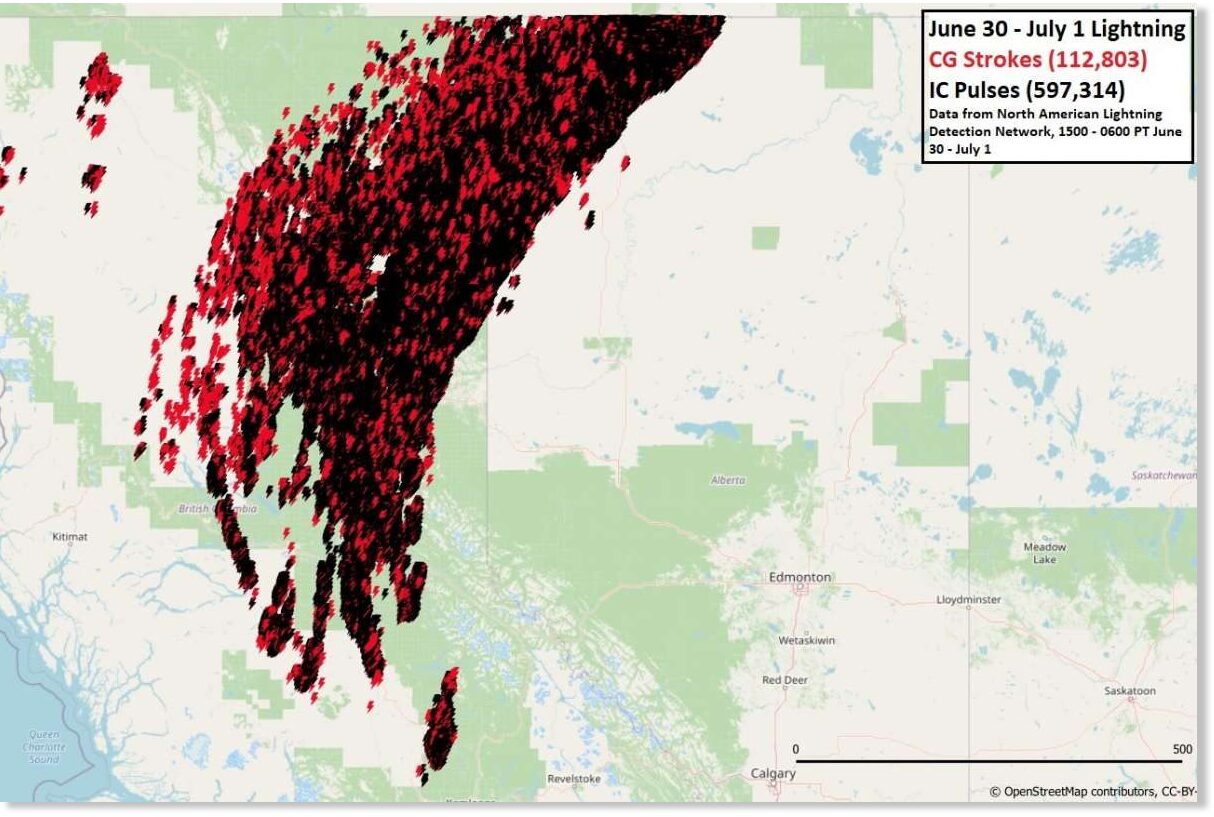
It is reported that one of these fires devastated 90% of a small village called "Lighton" of about 250 people in British Columbia, western Canada, after recording the highest temperature in Canada ever reached 121 Fahrenheit (49.6 Celsius).


This article was written originally in Arabic and is translated using a 3rd party automated service. ArabiaWeather is not responsible for any grammatical errors whatsoever.
See More
Related News
The history of perfumes and the secrets of choosing the best men's and women's fragrances according to the season

The history of perfumes and the secrets of choosing the best men's and women's fragrances according to the season

Breaking | A 7.2 magnitude earthquake strikes Japan; warnings of devastating tsunamis.

Breaking | A 7.2 magnitude earthquake strikes Japan; warnings of devastating tsunamis.

Jordan | Timeline of the low-pressure system that will begin affecting the Kingdom on Monday evening

Jordan | Timeline of the low-pressure system that will begin affecting the Kingdom on Monday evening

Jordan: A second-degree (normal) low-pressure system will begin Monday evening, followed by a very cold air mass at the end of the week.

Jordan: A second-degree (normal) low-pressure system will begin Monday evening, followed by a very cold air mass at the end of the week.