

 English
Arab Sea | Eastern winds push dust from Iran towards the coasts of the UAE and Oman in the coming hours


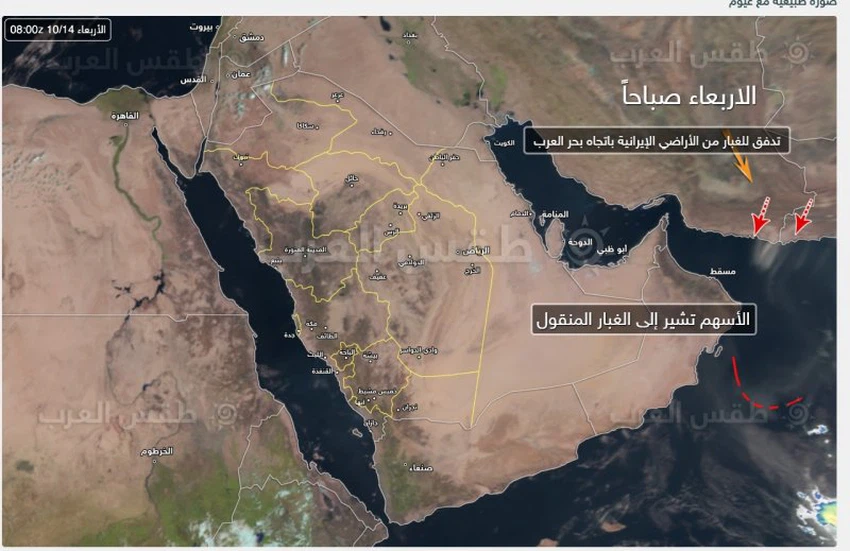
Arab Weather - The latest satellite images of Arab weather show the flow of quantities of dust and dirt from the Iranian lands towards the Arabian Sea as a result of the activity of the eastern winds that excite dust and dust, and in the coming hours, they may affect some of the Omani and UAE coasts overlooking the Gulf of Oman.
Causes of the current dust wave
The reason for the activity of these eastern winds is due to the thermal differences between the cold bloc concentrated over Iran, and another, hotter mass centered over the Arabian Peninsula, and the difference in air pressure values between the high above Iran and the low over the Arabian Sea
More details about the expected weather in the Arabian Gulf until the end of October, you can find when subscribing to the seasonal bulletin on the Arab Weather application


Arabia Weather App
Download the app to receive weather notifications and more..